
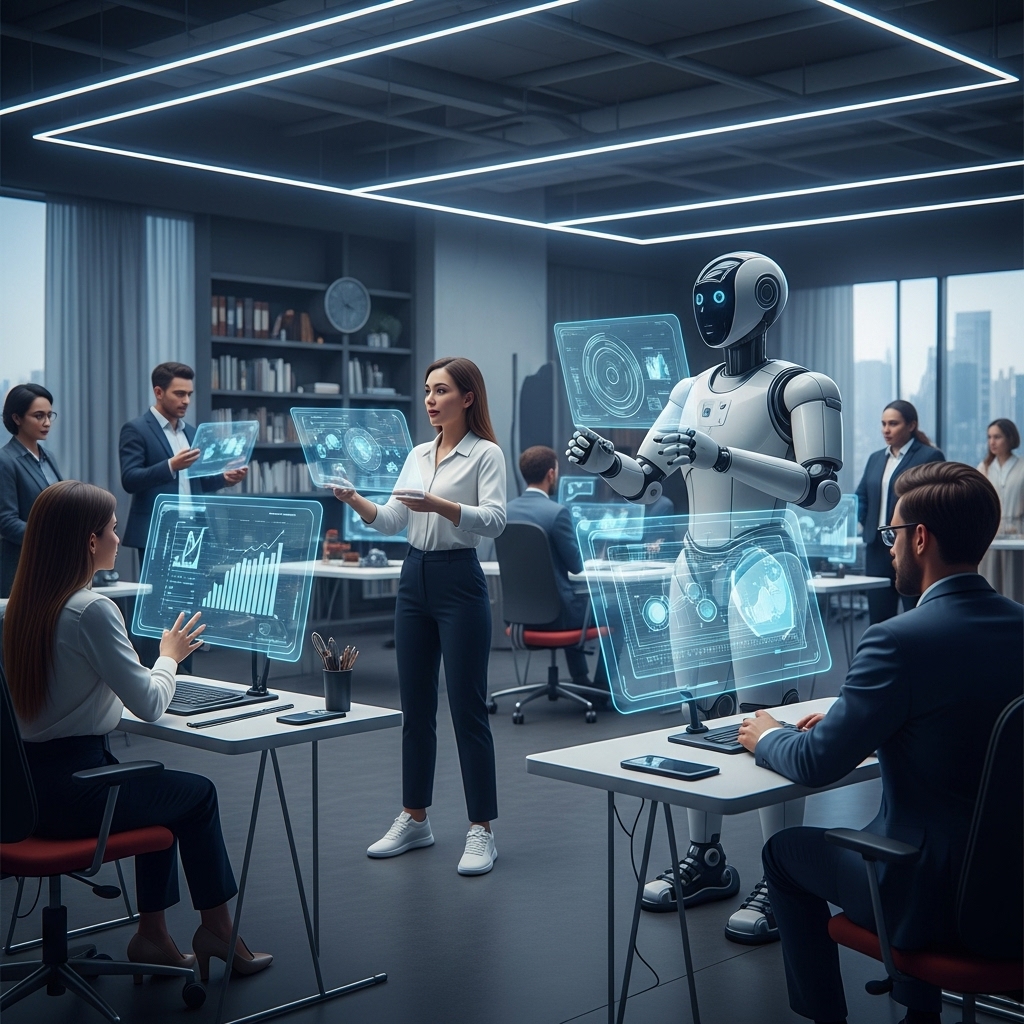
Introduction: AI Is No Longer the Future — It’s the Present
Artificial Intelligence (AI) is no longer a concept reserved for science fiction or tech laboratories. Today, AI is actively transforming how people work, communicate, and earn money. From automated customer support to AI-powered medical diagnosis, the impact of AI on jobs is accelerating faster than ever.
For many people in the United States, Canada, Europe, and Australia, the biggest question is no longer “Will AI affect my job?” but rather “How can I adapt and benefit from it?”
This article explores how AI will reshape jobs by 2030, which careers are growing, which roles may disappear, and how individuals can future-proof their skills.
1. Why AI Is Transforming Jobs So Fast
AI adoption is growing rapidly because it offers three major advantages:
-
Efficiency – AI can work 24/7 without fatigue
-
Cost Reduction – Businesses save money on repetitive tasks
-
Accuracy – AI systems reduce human errors
Companies across industries are using AI to automate routine work, analyze massive data, and improve decision-making. As a result, job roles are evolving rather than disappearing entirely.
2. Jobs That Are Most Likely to Be Replaced by AI
Some roles are highly repetitive and rule-based, making them vulnerable to automation.
High-risk job categories:
-
Data entry clerks
-
Basic customer support agents
-
Cashiers and ticketing staff
-
Simple accounting and bookkeeping roles
-
Factory assembly line workers
However, automation does not always mean job loss. In many cases, it means job transformation, where humans supervise or collaborate with AI systems.
3. New AI-Driven Careers That Are Rapidly Growing
While some jobs decline, many new opportunities are emerging.
🔥 Fast-growing AI-related jobs:
-
AI Prompt Engineer
-
Machine Learning Specialist
-
AI Content Creator
-
Automation Consultant
-
AI Ethics Officer
-
Data Analyst
-
AI Marketing Strategist
These roles focus on managing, training, optimizing, or ethically guiding AI systems, rather than competing with them.
4. Industries That Will Benefit the Most from AI
AI will impact almost every sector, but some industries will experience massive growth: 
🏥 Healthcare
-
AI-assisted diagnosis
-
Robotic surgery
-
Patient monitoring systems
💰 Finance
-
Fraud detection
-
Automated trading
-
Personalized financial planning
🎓 Education
-
AI tutors
-
Personalized learning paths
-
Automated grading
🛒 E-commerce & Marketing
-
Predictive customer behavior
-
AI-generated content
-
Smart advertising targeting
5. Human Skills That AI Cannot Replace
Despite AI’s intelligence, certain human abilities remain irreplaceable.
🧠 Skills that will stay valuable:
-
Creativity and imagination
-
Emotional intelligence
-
Strategic thinking
-
Leadership and communication
-
Ethical decision-making
Jobs combining human judgment + AI tools will dominate the future workforce.
6. How to Prepare for the AI Job Market
Future-proofing your career does not require becoming a programmer overnight.
✅ Practical steps anyone can take:
-
Learn how to use AI tools (ChatGPT, Midjourney, automation platforms)
-
Improve digital skills (content creation, analytics, SEO)
-
Focus on problem-so
-
lving and creativity
-
Build a personal brand online
-
Explore remote and freelance opportunities
People who use AI will replace people who ignore AI.
7. Remote Work and the Rise of AI Freelancers
AI is accelerating the global remote work economy. Companies now hire talent based on skills, not location.
🌍 Popular AI-powered freelance roles:
-
AI video editor
-
AI social media manager
-
AI blog writer
-
Automation specialist
This trend benefits individuals from all countries who can offer digital services to high-income markets.
8. Will AI Create More Jobs Than It Destroys?
Historically, technological revolutions have always created more jobs than they eliminated. AI is expected to follow the same pattern.
According to global economic forecasts, AI could create millions of new jobs by 2030 — especially in tech, healthcare, and creative industries.
The challenge is not job availability, but skill adaptation.
9. Ethical Concerns and the Role of Humans
AI raises serious ethical questions:

-
Data privacy
-
Bias in algorithms
-
Job displacement
This is why governments and companies are increasingly hiring AI ethics professionals to ensure responsible AI usage.
Humans will remain essential decision-makers.
Conclusion: Adapt, Don’t Compete
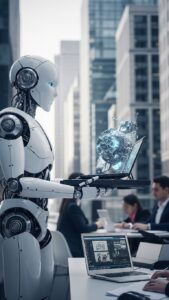
The future of work is not about humans versus machines — it is about humans working with machines.
Those who embrace AI as a tool will unlock new income streams, flexible work lifestyles, and global opportunities. Those who resist change may struggle to keep up.
AI is not here to replace you — it is here to upgrade you.
-